Blog

  • Know Your Net Worth and How to Increase It

    Knowing your net worth is essential for anyone who wants to attain financial freedom. It helps you understand how much you are worth financially and sets a base point in your journey to financial freedom.

    What does net worth mean

    Your net worth is the difference between everything you owe and everything you own. Or, to put it another way, it’s the difference between your liabilities and your assets.

    Before we can continue, let’s break down the difference between a liability and an asset.

    • Assets are things you owe that have financial value. These could be either cash or can be converted into cash. They include your various investments, savings, house, cars, etc
    • Liabilities are debts or outstanding financial obligations. They include loans and other forms of debt.

    How to calculate your net worth

    Before calculating your net worth, you need to know all your assets and liabilities. Then subtract your liabilities from your assets like this.

    AssetsLiabilities = Your Net Worth

    For example, if your total assets equal Ksh 800,000 and your total liabilities equal Ksh 600,000, your net worth is Ksh 200,000.

    Here is a net worth calculator to make it easier for you to calculate your net worth

    How to increase your net worth

    I was shocked at the result when I first calculated my net worth. It was much lower than I expected.

    Even though on the surface, I thought I was doing ok financially, paying my bills, and living below my means, the low result was a big eye-opener for me. I knew then that I needed to make a change.

    And just like me, your result may be lower than you expected. Or it may even be in the negative because of the amount of debt that you have.

    No matter the result, knowing your net worth allows you to see where you are financially today and help you figure out the steps you need to take to increase it.

    To help guide you, here are things you can do to increase your net worth:

    1. Pay your debts

    One of the best ways to improve your net worth is to reduce your liabilities by paying off all your debts. It would be best if you came up with a plan for this.

    You can start paying off the debts with the highest interest rates and move to the lower ones.

    As for me, I decided to pay more than the required amount each month, and any extra cash I received went to paying loans. This way, I was able to pay off all my loans faster.

    Another way you can help reduce the loans is by consolidating them into one loan. This simply means taking out another loan to pay off multiple loans.

    You do this by combining the loans into one and paying them off. After that, any payments you make will be to pay off the new loan.

    This approach works well if the new loan has a lower interest rate than the other loans.

    Some SACCOs and banks offer this option. Talk to your bank or SACCO to see how you can consolidate your loans.

    2. Increase your savings

    To increase your net worth, you must increase your savings. You can start by increasing your emergency fund with 3-6 months worth of expenses. This will help you avoid getting into debt in case of unexpected emergencies.

    Save your emergency fund where it will earn interest. A money market fund is an excellent place to save your fund due to its relatively good returns and low risk. This way, your savings will grow faster as you continue to save.

    Growing your fund to 3-6 months worth of expenses is not easy. To help you figure out how to do it, here are six practical ways to increase your emergency fund

    3. Invest

    Once you have paid off your debts and increased your savings, it’s time to invest. Investing allows your money to grow over time which will help you increase your net worth.

    You can invest in land or properties, the Stock Market, Treasury Bills, and Bonds, etc.

    As you invest, make sure to invest in more than one investment. This will help you manage your risks if one investment fails.

    Final Note

    Increasing your net worth may be challenging and may take a bit of time or even years, but with focus, determination, sacrifice, and the right systems, you will see a gradual improvement.
  • Investing in the Treasury Bond Secondary Market: A Guide For Beginners

    Treasury Bonds (T-Bonds) are debt securities issued by the national government and bought by individual or corporate investors. The first issuance of bonds by the national government is the Treasury Bond primary market.

    The secondary market for T-Bonds is the bond market, where investors may buy an existing Bond previously issued but purchased through brokers or other third parties. In such a case, the broker or third party acts as an intermediary between the buying and selling bond parties.

    The secondary market bond brokers usually buy the T-Bonds floated by the government and re-sell them to investors who might have missed the opportunity in the primary market.

    Example of a Taxed Treasury Bond: Fixed Coupon Bonds Issuances (FXDs)

    Most T-Bonds have fixed coupon or interest rates. This means that the rate of return will be constant throughout the Bond’s life, and the investor can tell how much they will receive in total by the time the Bond matures.

    If you decide to invest in a T-Bond whose duration is ten years with a face value of Kshs 200,000 and a coupon rate of 10%, you will earn Kshs 10,000 every six months. The interest or coupon received by the investor will be charged a 15% Withholding tax.

    This means you will receive Kshs 8,500 every six months throughout the Bond’s life to maturity. And upon maturity, you will receive the principal amount invested of Kshs 200,000.

    In other words, the Bond’s life will have two semi-annual coupon payments of Kshs 8,500 each. So, the total 10-year coupons will be 28,50010= Kshs 170,000.00

    Total return on the Investment will therefore be Kshs 170,000 + Kshs 200,000 = Kshs 370,000.00

    Suppose a T-Bond broker floats or sells a T-Bond in the secondary market with Bond details as below:

    Bond Issue: FXD1/2012/20
    Maturity Date: 1st November 2032
    Coupon Rate: 12%,
    Ask Price: 107.123
    Yield to Maturity: 11.76%.

    This means that the T-Bond is the first issue of its kind, and it has a fixed coupon rate (FXD1), was issued in 2012, and has a 20-year bond life or duration.

    Furthermore, the T-Bond will mature on 1st November 2032, with a coupon rate of 12% per year, paid every six months to the investor.

    The ask price, in this case, is the unit price per Bond share that the broker is willing to sell to any potential buyer. The investor will then purchase the Bond based on the available investment amount and compute with the ask price to get the total payable amount.

    The yield to maturity percentage is the annualized percentage return the investor will receive if they bought the Bond at the Ask price and held it until maturity.

    Note that the yield to maturity is an optional part for the investor. Suppose the investor is paid the semi-annual coupons and decides to re-invest each coupon paid back into the Bond. In that case, the investor will receive the principal amount plus total accrued coupons re-invested to maturity and returns quantified on the Yield to Maturity rate upon maturity.

    If the investor opts not to re-invest, the yields to maturity do not apply. Each time an investor re-invests the coupon received, the following principal amount becomes the principal amount plus the re-invested coupon, repeated throughout the Bond until maturity.

    Example of a Tax-Exempt Treasury Bond: Infrastructure Bonds Issuances (IFBs)

    The national government issues Infrastructure Bonds for purposes of funding infrastructure projects. In Kenya, they attract a lot of interest in both the primary and secondary market from investors because they are not taxed.

    If you decide to invest in an Infrastructure Bond whose duration is ten years with a face value of Kshs 200,000 and a coupon rate of 10%, you will earn Kshs 10,000 every six months. Upon maturity, you will receive the principal amount invested of Kshs 200,000.

    In other words, the Bond life will have two semi-annual coupon payments of Kshs 10,000 each. So, the total 10-year coupons will be 210,00010= Kshs 200,000.00
    Total return on the Investment will therefore be Kshs 200,000 + Kshs 200,000 = Kshs 400,000.00

    If a broker floats or sells a T-Bond in the secondary market with Bond details as below:

    Bond Issue: IFB1/2015/09
    Maturity Date: 2nd December 2024
    Coupon Rate: 11%,
    Ask Price: 110.914,
    Yield to Maturity: 7.60%

    This means that the T-Bond is an infrastructure T-Bond, the first of its kind, and it has a fixed coupon rate (IFB1), was issued in 2015, and has a 9-year bond life or duration. The T-Bond will mature on 2nd December 2024, at a coupon rate of 11% per year.

    The concepts of Yield to Maturity and Ask price apply here as they did to the FXDs explained in the first part. The underlying difference is that, unlike the FXDs T-Bonds, the IFBs T-Bond’s principal amount reduces each time a coupon is paid to the investor. This means the principal amount upon which the second and subsequent coupons are paid will be less than the initial invested amount.

    Upon maturity, the principal amount is not reimbursed to the investor, unlike the FXDs, which pay the investor back the principal amount invested upon maturity. On many occasions, the IFBs offer higher coupon and yield rates and are always tax-exempt.

    Takeaways from the Treasury Bond Secondary Market

    The individual or corporate investor may buy Bonds directly, aiming to hold them until they mature to profit from the coupons they earn.

    However, they may also decide to buy into a Bond exchange-traded fund (ETF) or a Bond mutual fund through brokers, as earlier stated.

    Professional Bond brokers and traders dominate the T-Bonds secondary market, where existing issuances are bought and sold to investors at a discount to their face value. The discount amount depends partly on how many payments are still active or due before the T-Bond reaches maturity.

    But the Bond price also is dependent on the direction of interest rates. Suppose an investor thinks interest rates on new bond issues will be lower. In that case, the existing bonds may be worth a little more since it’s not affected by intermediary interest or market risk such as inflation.

    It is important to note that the secondary market carries similar risks just like the primary market for T-Bonds. This is because they are both issued by the national government. For this reason, a T-Bond is prone to lose significant value if the government goes bankrupt or defaults. This means it can no longer repay in full the initial investment nor the interest owed during the bond duration or upon its maturity.

  • Investing In Treasury Bonds: A Complete Guide For Beginners

    Treasury Bonds are medium to long-term secure investment options offered by the government.

    Treasury Bonds pay interest every six months till maturity. Upon maturity, the investor or owner is paid an amount equivalent to the principal investment (the original amount invested). 

    There are several types of bonds that are generally made available in Kenya:

    • Fixed Coupon Bonds. These are the most common bonds auctioned by the Central Bank. They have a fixed interest rate over the Bond’s life, so semiannual interest payments from these bonds will stay the same.
    • Infrastructure Bonds. The government uses infrastructure bonds for specified infrastructure projects. These bonds typically see a lot of market interest because returns from them are tax-exempt.
    • Zero-coupon Bonds. These are similar to Treasury Bills in that they are sold at a discount and do not have interest payments. They are also typically issued for a short period.

    Investing in Treasury Bonds

    Here is a detailed step-by-step guide to help you start investing in Treasury Bonds through the Central Bank of Kenya (CBK).

    1. Open a CDS Account

    Before investing in Treasury Bonds, you need to have a CDS account with the Central Bank. It is free to open one, and it is how the Central Bank keeps track of who holds which government securities.

    To open a CDS account, you must have a bank account with a Kenyan commercial bank. You also need to collect a mandate card from the CBK and fill it out in block letters. 

    You will need to fill in your contact information and information about your commercial bank account on the mandate card. You’ll also need to have two signatories from your bank sign the card to verify the information you’ve provided.

    When submitting your mandate card, you’ll need to submit a passport-sized photograph of yourself, which must be certified and stamped by a representative from your commercial Bank.

    Finally, you’ll also need to submit a clear copy of your National Identity Card, passport, or alien certificate.

    2. Decide How You Want to Invest

    Treasury Bonds are offered for a set amount of years, ranging from 1 to 30 years. When choosing a bond to invest in, you’ll need to consider what is available in the upcoming auction and how long of a commitment you want to make.

    When you are ready to invest, you should monitor the upcoming bond prospectuses to find the right opportunity for you. In the prospectus, you will find information about the different Bonds on offer, including the Bonds’ durations until maturity or tenor and the coupon rates.

    The coupon rate refers to the interest payments you receive every six months. They can either be determined in the prospectus, which is typical for longer tenors, or be market-determined. You will also find information in the prospectus about when investors will receive interest payments and the final redemption payment, and how much taxation the returns are subject to.

    For more popular Bonds, you might also find information about amortization. 

    When the government expects a bond to result in significant investment, it will use amortization to reduce its burden when the bonds mature. 

    Amortization means that instead of paying investors back in one lump sum at the end of the Bond’s tenor, the Treasury pays portions of the Bond back throughout its life. 

    After these portions have been paid back to investors, they receive smaller interest payments as their money held with the Treasury has been reduced.

    3. Complete and Submit an Application Form

     When you are ready to invest, you need to complete a Treasury Bond application form.

    This includes information about the Treasury Bond you want to purchase, like the issue number, the duration, and the amount you want to invest. 

    You will also need to fill in your personal information, CDS account number, commercial bank account number, and whether your investment funds come from a local or offshore source.

    You have two options for selecting a rate on the application form: the percentage of your face value investment that you will receive in semi-annual interest payments. 

    • If the Bond has a pre-determined coupon rate in the prospectus, you should choose Non-Competitive/Average Rate
    • If the prospectus says that the coupon rate is market-determined, you can select either the Interest/Competitive Rate or the Non-Competitive/Average Rate.

    Investors who choose the Interest/Competitive Rate bid on the Bonds by submitting the coupon rates they would like to have for that Bond. 

    The Central Bank then decides what bids it will accept and determines the Non-Competitive/Average Rate investors will receive using an average of those rates. 

    The final section on the application form is the Rollover Instructions. To easily facilitate re-investment, investors with maturing Bonds can use their returns to purchase additional government securities. The Bond prospectus will include the dates of the Bond’s sale period. 

    You must submit your application form to the Central Bank’s head office or one of its branches by 2 pm on the Tuesday of the last week of the Bond’s sale period.

    4. Getting the Auction Results

    The Central Bank’s Auction Management Committee (AMC) meets at 4 pm on auction days. After considering all received bids, the committee determines the cut-off rate and the weighted average of the accepted bids for market-determined coupon rate bonds. 

    The results from the auction are published through Treasury Mobile Direct (TMD), Twitter, and in the statistics section of the CBK website. 

    While investors will typically receive Treasury Bonds in the amount they applied for, the Central Bank can issue Bonds in a lower amount.

    Following the auction, investors need to call or visit the Central Bank or its branches to determine if their applications were successful and how much they owe for their Treasury Bonds. 

    5. Payment

    The payment period for an auction typically closes on the following Monday at 2 pm. Investors can submit their payments in the amounts specified when they contact the Central Bank through cash or banker’s cheques for amounts under Ksh. one million and through a KEPSS transfer for larger amounts. 

    Successful applicants who fail to submit payments within the payment period can be barred from future investment in government securities.

    6. Maturity Proceeds

    Upon investment in a Treasury Bond, the investor will receive interest payment semi-annually in their commercial bank account as indicated on the CDS account throughout the tenor of the Bond. 

    When the Bond matures, the investor will receive the last interest amount and the Bond’s face value. 

    Alternatively, investors may choose to roll over their security into a new forthcoming issue. In this case, they have to complete the application form giving rollover instructions and submit it to Central Bank before the closure of the sale period for that Bond. 

    The maturity date of the maturing security (investment) and the value date of the new Bond MUST match for the rollover instruction to be successful. The Bank, therefore, does not remit face value into the investor’s account but instead sends only refunds amounts generated from new investment.

    Final Note

    Treasury Bonds are among the most secure mid-long term investment with a good return. They are great investments for investors seeking to diversify their investment portfolios. They are especially great for those close to retiring and who need a predictable income source during their retirement.

    In the next part of the series, we will examine how the Treasury Bond secondary market works.

  • Investing In Treasury Bills: A Complete Guide For Beginners

    Treasury Bills are short-term investments with a maturity period of 91, 182 or 365 day periods. This means that as an investor, you will receive your returns on investment within 3, 6 or 12 months.

    The government auctions the Bills weekly through the Central Bank of Kenya. You can invest in Treasury Bills through the Central Bank or a commercial or investment bank if you hold an account with the respective institutions.

    This article will look at investing in Treasury Bills through the Central Bank.

    Investing in Treasury Bills through the Central Bank

    Here is a detailed step-by-step guide to help you start investing in Treasury Bills.

    1. Open a CDS Account

    Before investing in Treasury Bills, you need to have a CDS account with the Central Bank. It is free to open one, and it is how the Central Bank keeps track of who holds which government securities.

    To open a CDS account, you must have a bank account with a Kenyan commercial bank. You also need to collect a mandate card from the CBK and fill it out in block letters. 

    You will need to fill in your contact information and information about your commercial bank account on the mandate card. You’ll also need to have two signatories from your bank sign the card to verify the information you’ve provided.

    When submitting your mandate card, you’ll need to submit a passport-sized photograph of yourself, which must be certified and stamped by a representative from your commercial bank.

    Finally, you’ll also need to submit a clear copy of your National Identity Card, passport, or alien certificate.

    2. Decide How You Want to Invest

    Treasury Bills are offered every week, with maturities of 91 days, 182 days, and 364 days. This means that when you are ready to invest, you will be able to choose from one of those options. 

    You should decide on a maturity length based on the recent interest rates, which can give you an idea of what to expect in upcoming auctions and how long you can commit your funds for.

    The minimum amount you can invest in Treasury Bills is Ksh 100,000, and you must invest in denominations of Ksh 50,000. Because Treasury Bills are sold at a discount, this amount is what you will receive at the end of the 91, 182, or 364-day maturity. Your initial investment will be less than the face value.

    3. Complete and Submit an Application Form

    When you are ready to invest, you need to complete a Treasury Bill application form. This includes information about the Treasury Bill you want to purchase, the issue number, the maturity period, and the amount you wish to receive upon maturity. 

    You will also need to fill in your personal information, CDS account number, and whether your investment funds come from a local or offshore source.

    You have two options for selecting a rate on the application form, which determines how much you will pay for the bill and, therefore, what your return will be when the bill matures. 

    You should select either the Interest/Competitive Rate or the Non-Competitive/Average Rate.

    • Investors who choose the Interest/Competitive Rate bid on the Treasury bills by submitting interest rates they would like to pay. The Central Bank then decides what bids it will accept and determines a cut-off. Investors who submitted interest rates above that cut-off do not receive Treasury bills from that auction.
    • Investors who choose the Non-Competitive/Average Rate are guaranteed to receive Treasury bills from the auction. But their interest rate is a weighted average of the accepted bids from the investors who entered Interest/Competitive rates. While they are guaranteed to receive a bill, the maximum face value for Non-Competitive/Average Rate applications is KES. 20 million.

    The final section on the application form is the Rollover Instructions. To easily facilitate re-investment, investors with maturing bills and bonds can use their returns to purchase additional government securities.

    You must submit your application form to the Central Bank’s head office or one of its branches by 2 pm on Thursday for 364, 182, and 91-day bills.

    4. Get the Auction Results

    The Central Bank’s Auction Management Committee (AMC) meets at 4 pm on auction days, and after considering all received bids, determines the cut-off rate and the successful weighted average of the accepted bids. 

    The results from the auction are published through Treasury Mobile Direct (TMD), Twitter, and in the statistics section on the CBK website. While investors will typically receive Treasury Bills in the amount they applied for, the Central Bank can issue bills for a lower amount.

    Following the auction, investors need to call or visit the Central Bank or its branches to determine if their applications were successful and how much they owe for their Treasury bills. 

    5. Payment

    The payment period for an auction typically closes on the following Monday at 2 pm. 

    Investors can submit their payments through cash or banker’s cheques for amounts under Ksh 1 million and through a KEPSS transfer for larger amounts. Successful applicants who fail to submit payments within the payment period can be barred from future investment in government securities.

    6. Maturity Proceeds:

     At the end of the 91, 182 or 364-day period, the face value amount of the Bill will be remitted into the commercial bank account indicated on the CDS account. 

    Alternatively, an investor may choose to roll over their securities into a new forthcoming issue. In this case, they have to complete the application form giving rollover instructions and submit it to Central Bank before closing the sale period for that Bill. 

    The maturity date of the maturing security (investment) and the value date of the new Treasury Bill MUST match for rollover instruction to be successful. The bank, therefore, does not remit maturing proceeds into the investor’s bank account but instead sends only refund amounts generated from the new investment.

    Final Note

    Treasury Bills are among the most secure short-term investments with a good return. They are great investments for investors seeking to diversify their investment portfolio while earning short-term stable returns.

    In part 3 of the series, we will look at investing in Treasury Bonds.

  • An Introduction to Treasury Bills and Bonds

    Any wealth generation activity in business is characterized by opportunity risks. Many investors have had to deal with information overload on investment options and in the process, some ended up making costly investments at minimal guaranteed returns. 

    For this reason, this article focuses on providing reliable insight and a breakdown into treasury bonds and bills trade as one of the most secure investment options with regular returns and flexibility. 

    Understanding Treasury Bills And Bonds

    Treasury Bills

    Treasury Bills or T-Bills are units through which the government borrows from the local market, offering investors a chance to make returns at very assured attractive rates.

    They are short-term investments that have a maturity period of 91, 182 or 365 day periods. This means that as an investor, you will receive your returns on investment within 3, 6 or 12 months.

    The government auctions the bills weekly through the Central Bank of Kenya. You can invest in treasury bills through a commercial or investment bank if you hold an account(s) with the respective institutions. 

    Commercial or Investment banks can also invest in treasury bills directly through the Central Bank. Presently, the least amount you need as an investor to buy T-Bills is KES 100,000.

    Treasury Bonds

    Unlike the short-term T-Bills, the Treasury bonds or T-Bonds are medium to long term secure investment options offered by the government.

    The T-Bonds pay interest every six months till maturity. Upon maturity, the investor or owner is paid an amount equivalent to the principal investment (the original amount invested). 

    Most T-Bonds have a fixed interest rate throughout the tenure of the bond. This gives an investor the ability to predict the returns throughout the bond life as a long-term income source. 

    Individuals and businesses can invest in T-Bonds as an applicant of a commercial bank or investment bank in Kenya, but if you as an investor hold a bank account with a local commercial bank, you can as well invest directly through the Central Bank, with the least investment amount being Ksh 50,000.

    Risks of Investing In T-Bills And T-Bonds

    Investing in T-Bills and T-Bonds is a great way to generate short-term, medium-term or long-term income besides being one of the safest ways to invest compared to stocks. 

    Nevertheless, investors need to be aware of the opportunity or unforeseen risks that can impact the return on investment on the two. 

    Below are some of the main risks involved in treasury trades in bonds and bills:

    Realized Loss 

    Although T-Bills and T-Bonds can be traded before their maturity period, an investor ought to know that the price received for selling either a T-Bills and T-Bonds may be lower than the initial purchase price of the T-Bills and T-Bonds. 

    For instance, if either of the two was bought for KES 1 Million and was sold before its maturity, the investor might receive KES 0.95M in the treasury financial market. 

    Investors are only assured the principal investment amount if they hold the T-Bills and T-Bonds until maturity.

    Inflation and Bond Term

    When you buy a T-Bill or T-Bond or both, you commit to getting a rate of return, for the duration of the investment. But if inflation and the cost of living increase radically, and at a rate faster than income investment, investors will see their buying power wear down, and they may essentially achieve a negative rate of return on the investment when factoring in inflation. 

    For instance, suppose an investor earns a 5 % rate of return. If inflation grows at 6% after the T-Bill or T-Bond purchase, the investor’s actual rate of return is -1% due to the decrease in purchasing power.

    Find out more about how inflation affects your invests here.

    Bond Prices and Coupon (Interest) Rate Risk

    An investor needs to know the inverse relationship between the two. When there is a fall in the coupon rates, the T-Bill and T-Bond prices rise due to high uptakes. On the other hand, when interest rates rise, bond prices tend to fall because of low uptake. 

    This occurs because when coupon rates are on the fall, investors try to lock or capture in the highest rates they can as long as possible. To do this, they will buy existing bonds that pay a higher interest rate than the prevailing market rate. This rise in demand results in an increase in bond prices and vice versa.

    Final Note

    Treasury Bonds and Bills are one of the most secure investments with a good return in the short, mid and long term. They are great investments for those who are in or close to retirement or any investor seeking to diversify their investment portfolio while earning a stable return.

    In part 2 of the series, we will walk you through the different ways to invest in Treasury Bills and Bonds.

  • 5 Ways To Pay Less in Taxes While Growing Your Savings and Investments

    Let’s face it, knowing how much of your income goes to paying taxes is not a pleasant thing. And this hits home when you file your tax returns. That’s when you get to see the total amount you paid in taxes for an entire year.

    And no matter how much you complain about it, the fact is that you will still have to pay taxes. At least if you are planning on being an upstanding citizen.

    The good thing is that the government provides upstanding citizens such as yourself with legal ways to pay less in taxes while growing your investments and savings.

    In this article, I will focus on how the Kenyan government allows you to do this. If you live in another country, your government may offer similar or better incentives.

    The Why

    But first things first: Why would the government want you to pay less in taxes? Considering its ever-increasing budget and missed tax collection targets.

    The simplest way I can put this is the government wants you to save and invest more. By offering tax incentives, the government wants to encourage activities or outcomes that either benefit you or itself.

    Now with that understanding, let’s look at those tax incentives.

    5 ways you to pay less in taxes

    Let’s take a look at five tax incentives that let you pay less in taxes while growing your savings and investments

    1. Invest in Infrastructure Bonds

    When the government wants to build roads, railways etc and needs to raise funds for the project, they issue infrastructure bonds. These bonds allow you to lend the government money for a certain period.

    During that period, the government pays you interest on the money you loaned it. This is a bit like how you pay interest on a loan you took from a bank. Only this time, you are the bank and you are the one receiving the interest.

    To encourage you to invest in the infrastructure bond, the government offers tax exemption on the interest you earn from the bond. This makes them a very popular investment option for many people and institutions.

    2. Get a Pension

    We all need a pension that will sustain us in our old age. It’s also in the government’s best interest for its aging citizens to be able to sustain themselves.

    To encourage you to save for retirement, the government offers tax exemptions to anyone with a pension scheme. The catch is that the pension scheme has to be registered by the Retirement Benefits Authority .

    The tax exemption covers up to Ksh 20,000 monthly contributions or Ksh 240,000 per year.

    Also, the first Ksh 600,000 lump sum that you withdraw upon retiring and Ksh 25,000 monthly pension that you receive is tax-free.

    3. Get a Mortgage

    Part of the government’s big four agenda is to create affordable housing. In other words, the government wants as many people as possible to own their own houses.

    Another way it has been trying to push homeownership is to offer mortgage relief. This relief covers mortgages up to Ksh 25,000 monthly or Ksh 300,000 per year.

    You also qualify for the same relief if you borrow money from a registered financial institution to improve your home. The only condition is that you must be residing in that house.

    4. Save for your next home

    If you prefer not to take a mortgage but save to buy a home then, you can sign up for a Home Ownership Savings Plan (HOSP).

    This will entitle you to a tax relief on deposits of a maximum of Ksh 8,000 per month or Ksh 96,000 per year. To make it more appealing, you get a tax exemption on interest earned from the savings up to a maximum of Ksh 3 million.

    An example of an HOSP is the Nyumba Yangu Savings Account by HF Group (Formerly Housing Finance)

    5. Get insured

    Another thing that we all need is life insurance. It will greatly help your family in the unfortunate event of your passing on.

    To encourage you to get a life insurance cover for yourself and your family, the government offers tax relief of 15% of the premium you pay up to a maximum of Ksh 5,000 or Ksh 60,000 per year.

    Final note

    As you can see, these tax incentives are beneficial to you. They help you diversify your portfolio and grow your savings. Additionally, they help protect and improve your livelihood.

    To see how much you can save in paying taxes, check out this KRA PAYE calculator.

  • A more advanced guide to understanding terms used in the stock market

    In an earlier article, I tried to break down some of the more commonly used terms in the stock exchange that someone who is starting out should know.

    In this article, I’ll try and breakdown some of the more advanced terms that are used in the stock market.

    Yield

    A yield is the measure of return on investments in terms of percentage. Stock yield is calculated by dividing the current price of the share by the annual dividend paid by the company for that share.

    For example, if the current price of the share is KSh 100 and the dividend paid is KSH 5 per share annually, then the stock yield is 5%.

    Income Stock

    This is a stock which has a solid record of dividend payments and offers dividend higher than the common stocks.

    Overvalued Stock

    An overvalued stock is a stock whose current price is considered to be higher than what it should be. This is calculated by metrics such as Price-to-Earnings ratio.

    If a stock is considered to be overvalued, the price of the stock is expected to drop down.

    Undervalued Stock

    An undervalued stock is a stock whose current price is lower than its actual value. Investors will buy these stocks to get higher returns in the future.

    Capital Gains

    A capital gain is an increase in value between the price a share is sold for and the price that an investor paid for the asset.

    Day Trading

    Day trading is the practice of buying and selling shares within a single day. Day traders will frequently buy and sell shares within several hours, or even several minutes to make quick profits.

    Traders who take part in day trading are often called “active traders” or “day traders”.

    Consumer Price Index (CPI)

    The consumer price index examines the average cost of a select group of consumer goods and services that range from food and beverages to smartphones and medical care.

    Price-to-Earnings Ratio (P/E)

    The price-to-earnings ratio helps you compare the price of a company’s stock to the earnings the company generates. It lets investors see whether the price of a stock accurately reflects the company’s earnings potential, or its value over time.

    A high P/E ratio means two things – either the company’s stock is overvalued, or investors expect high growth rate in the future. You can arrive at the PE ratio by dividing the current stock price by earnings per share.

    Return on Equity (ROE)

    Return on equity measures the overall earning performance of a company and also helps in measuring the profitability of different companies in the same industry.

    Higher ROE indicates that the management is doing a fine job in boosting business, adding to the wealth of its shareholders in the process.

    Debt-To-Equity Ratio

    A company’s debt-to-equity ratio is a performance metric that measures a company’s level of debt in relation to the overall value of their stock.

    In more simpler terms it is a measure of how well a company uses debt to finance its operations. Investors use it to gauge the health of a business.

    If a company has a high debt-to-equity ratio then that suggests the company may be relying too much on loans to fund operations. This makes it a high risk investment.

    But, if the ratio is too low then that suggests the company is paying for most of its operations with shareholder’s equity. This is an inefficient way to grow a business.

    Earnings Per Share (EPS)

    This is an investment metric that determines a company’s profit divided by its number of common outstanding shares. The result usually serves as an indicator of a company’s profitability.

    The higher a company’s EPS, the more profitable it is considered to be and vice versa.

    Retained Earnings

    Retained earnings tell you how much profit a company has left over after paying out dividends.

    Return on Equity (ROE)

    Return on equity is a measurement of how efficient a company is in using its assets from their shareholders to create earnings.

    Real Estate Investment Trust (REIT)

    A Real Estate Investment Trust is a company that owns, operates or finances income-producing real estate. It allows investors to invest in real estate without requiring them to directly purchase individual properties.

    An example of a REIT in Kenya is ILAM Fahari I-REIT

    Final Note

    By grasping most of these terms, you will be able to read or follow conversations about different company performances in the stock market. This will greatly aid you in your research of the best stocks to invest in.

    If you have read all this and feel comfortable enough to start investing in the Nairobi Securities Exchange, then here is an article I wrote to guide you on how to get started.

  • Emergency fund: Why you need one

    At one point, life will throw you a curveball. Unforeseen events and expenses that will require you to use your money to handle them.

    Like driving one night and finding a big stone in the middle of the road. A stone probably placed there to prevent a truck from rolling back down because it did not have enough power to go up the hill. A stone that you saw too late to avoid going over it. A stone that ends up damaging your gearbox so badly that you needed to replace it. Oh, and the onboard computer too.

    Lucky for me, I had set up an emergency fund for such scenarios. It enabled me to pay for all the costs of getting my car back on the road without affecting my ability to pay my normal expenses for that month.

    That is the importance of an emergency fund. And that is why you need one.

    What is an Emergency Fund

    Simply put, an emergency fund is money set aside to handle emergencies. It offers you a financial safety net to keep you going without having to rely on loans and other forms of debt. Like in my case.

    Most financial experts recommended that your emergency fund should cover between 3-6 months worth of expenses.

    To help you better understand, think of it this way. If you lost your job today, your emergency fund should keep you going for the next 3 -6 months without a drastic change in your lifestyle.

    How to get started setting an emergency fund

    For most people, saving money that can cover six months worth of expenses seems like an impossible task. But the thing to remember is that a journey of a thousand miles begins with a single step.

    You have to first make the decision to make the journey and then take the first step. And this step is what you can afford right now.

    Look at your budget and decide how much you can start with and then work your way to 3 months and then 6 months worth of expenses.

    It is important for you to understand that it will take time.

    Where to put your emergency fund

    Before you can start building your emergency fund, you need to decide where to put it.

    You should place it somewhere that you can easily access it in case of an emergency. And since you need all the help that you can get to grow it, place it somewhere that will give you good interest as you save.

    The most obvious choice is a savings account. But recently, interest rates on savings account in Kenya have been on the decline.

    So another great option would be a money market fund. They are low-risk investments that give you better returns.

    Once you figured out where to place it, it’s time to build your emergency fund.

    Here is an article I wrote on the best ways to build one.

    Final note

    I cannot stress enough how important it is to have an emergency fund. It provides a financial cushion that stops you from going into debt or touching your investments to pay the unexpected expenses that will come up.

    And that helps in your path to financial freedom.

  • Pay yourself first: The secret to saving more money

    If you are like me, you have struggled a lot with saving. After you get paid, the first thing you do is pay your bills and expenses. Then you spend on things like entertainment, clothes or even help out a friend in need.

    At the end of the month, you find that you barely have enough money left to save.

    The next month, you promise yourself that you will save more. But the cycle ends up repeating itself. And at the end of the year, when you do an analysis of your finances, you realise you didn’t save much.

    Following this cycle presents a big problem. You can’t achieve true financial freedom without having enough savings to help cushion you from what life throws your way.

    This is true not matter how much money you earn. If you don’t have a solid foundation to protect you, then one or two unexpected expenses can leave you in debt.

    The question is, how does someone stop this cycle?

    Pay yourself first strategy

    While there are many strategies that can help you increase your savings, one of the best is the paying yourself first strategy.

    The strategy is simple. Save your money as soon as you get paid instead of saving whatever remains after paying all your bills. For you, this will mean that your budget revolves around what is left after you save not before.

    To understand how effective it is, let’s use an example.

    Let’s assume you earn Ksh 30,000 and your goal is to save 20% of your income which is Ksh 6,000 per month. When you get paid, you immediately put aside the Ksh 6,000 as your savings. This leaves you with Ksh 24,000 to spend.

    If you did this consistently every month for a whole year, you would have saved Ksh 72,000.

    Now compare that with the strategy that lots of people use to save.

    After receiving the Ksh 30,000, you spend most of the money paying bills, expenses. If you get lucky, you may save an average of Ksh 2,000 a month from what remains. By the end of the year you would have saved Ksh 24,000.

    As you can see, the difference can be quite significant.

    How to get started.

    Getting started with the pay yourself first strategy is quite easy. A simple way to start is by going to your bank and creating a standing order. The standing order, should be to your savings or low risk investment account.

    Now I know creating a standing order is an extra expense. But if you struggle with saving then it’s worth it in the long run. This is because if the money leaves your account before you have a chance to spend it, then you are likely to hit your savings goals each month.

    Final note

    The pay yourself first strategy is a great way to help you build your emergency fund and a create a financial cushion for those unexpected expenses that come up.

    It may not be easy for some to switch to this strategy especially if you are used to the one I mentioned earlier. But if you hang in there and be consistent, you will be thankful that you made the switch.

  • A beginner’s guide to understanding terms used in the stock market

    You’ve finally decided that it was time to invest in the stock market. But after doing some research, you came across all these terms that are used in the stock market that left you confused. This made you start thinking that the stock market is too complicated and should be left to financial experts.

    For a long time, I thought that way too. But as I took the time to understand the basics, I realised it’s not as complicated as I thought. In this article, I want to help you understand some of the common terms used in the stock market.

    The Stock Market/ Exchange

    A Stock exchange or market is a place where stocks are traded. They allow investors to buy and sell shares of a company among each other. In Kenya, this market place is the Nairobi Securities Exchange (NSE).

    StockBroker/ Brokerage firm

    A stockbroker is a registered person or firm that acts on your behalf in buying and selling shares. For their services, they charge a commission. Before you choose a stockbroker, make sure that they are registered and approved by the regulatory authority in your country. In Kenya that would be the Capital Markets Authority.

    Thing to note
    Stocks and Shares essentially mean the same thing and are used interchangeably.

    An Order

    When you are ready to buy some shares, the first thing you do is to go to a broker and make an order. This will include the name of the company, the number of shares you want to buy and with a lot of brokers, the type of order.

    In the stock market, there are many types of orders. But as a beginner, you need to understand these two types of orders:

    • Limit Order – This is an order to buy or sell a share at a pre-defined price. Here is how it works. If a share is currently trading at Ksh 5 but you want to buy it at Ksh 4 then you set a limit order. Once the share price falls to Ksh 4, the order is then executed and the share is bought.
    • Market Order – This order tells your broker to buy or sell a share immediately at the best available price in the current market.

    Bids and Asks

    A Bid is the highest price a buyer is willing to pay for a stock while an Ask is the lowest price an owner is willing to sell the stock.

    The Bull and the Bear

    One of the most commonly used terms in the stock market is the Bull and the Bear. It is used a lot by financial experts when talking about the performance of the stock market. Here is what they mean:

    A Bull market is where we see the prices of shares rise consistently over a long period of time. Investors usually rush to the stock market to invest and make profits during a bull market.

    A Bear market is where we see the prices of shares fall consistently over a long period of time. Short-term investors usually cash out of the stock market during a bear market. An example of a bear market was during the 2007-2009 stock market crash.

    Types of Investors

    There are two types of investors in the stock market:

    • Retail investors. These are individual investors like you or me.
    • Institutional investors are the big players. These include pension funds, hedge funds, banks, investment companies etc

    Index

    Indexes measure the performance of certain stocks. This can tell us the overall performance of the stocks that the index tracks.

    The most popular ones are the Dow Jones Industrial Average (Dow Jones) and the Standard and Poor’s 500 (S&P 500). The Dow Jones tracks the stock performance of the 30 largest companies listed on the stock exchange in the US. The S&P 500 tracks the performance of the 500 largest companies listed in the US stock exchange.

    Other countries have their own indexes. In Kenya, we have FTSE NSE Kenya 15 index that measures the performance of the largest 15 stocks trading on the NSE. We also have FTSE NSE Kenya 20 index, FTSE NSE Kenya 25 index.

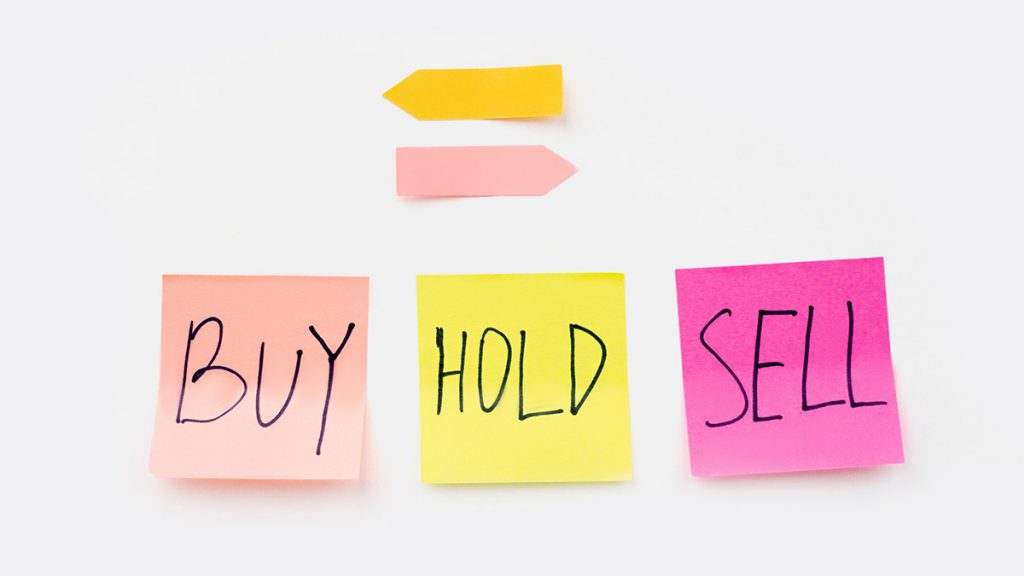
    Buy sell hold. common terms used in the stock market

    Buy Hold Sell

    Buy for you would mean to buy shares. To an analyst, it would mean they are recommending that you should buy the share.

    Hold means that you neither buy nor sell the stock. If you already have the stock in your portfolio, then it is best that you continue to hold on to the stock. And if you don’t have the stock, it is best to wait until the recommendation to buy is issued.

    Sell for you will mean sell your shares but for an analyst, it would mean a recommendation to sell.

    Dividend

    Dividend is the amount of money a company pays to its shareholders out of the profits it earned. It is usually declared as a percentage of the current share price and decided by the board of directors of the company.

    Initial Public Offering

    Initial public offering or IPO is the process through which a privately held company becomes public. IPOs are issued by smaller, younger companies seeking funds for expansion and growth, but large companies do this to become publicly traded companies.

    Market Capitalization

    This is the total value of all a company’s shares or stock. It is calculated by multiplying all the outstanding shares with the current market price of one share. It determines the company’s size in terms of its wealth.

    It is one of the most important things that investors look at when trying to decide if it’s worth buying shares of a company.

    Portfolio

    This is the collection of financial investments of an individual or institution. A portfolio may include stocks of different companies operating in different sectors. For example, if you have shares in Safaricom, KCB and Kakuzi, then this collection of stocks will be your portfolio.

    Bonus shares

    Bonus shares are extra or additional shares that a company gives to its shareholders at no additional cost. The number of bonus shares you get depends on the number of shares you originally own.

    Let’s say you own 1000 shares of KCB and they decide a 2:1 bonus. It means you will get two free shares for every share you own. So you will end with 2000 extra shares for a total of 3000 shares

    Final note

    Knowing these terms will go a long way in helping you understand how the stock market work and greatly aid in your research.

    If you still need to wrap your head around the whole concept of the stock market, here is an article I wrote that better explains the stock market